
What it does
Masonry Retaining Wall checks a reinforced concrete block wall on a concrete footing per metre run, for gravity and earthquake cases. It checks overturning, bearing and sliding, then checks the masonry stem, the footing and the detailing. The calculator's own User guide explains each input and check in detail.
What you enter
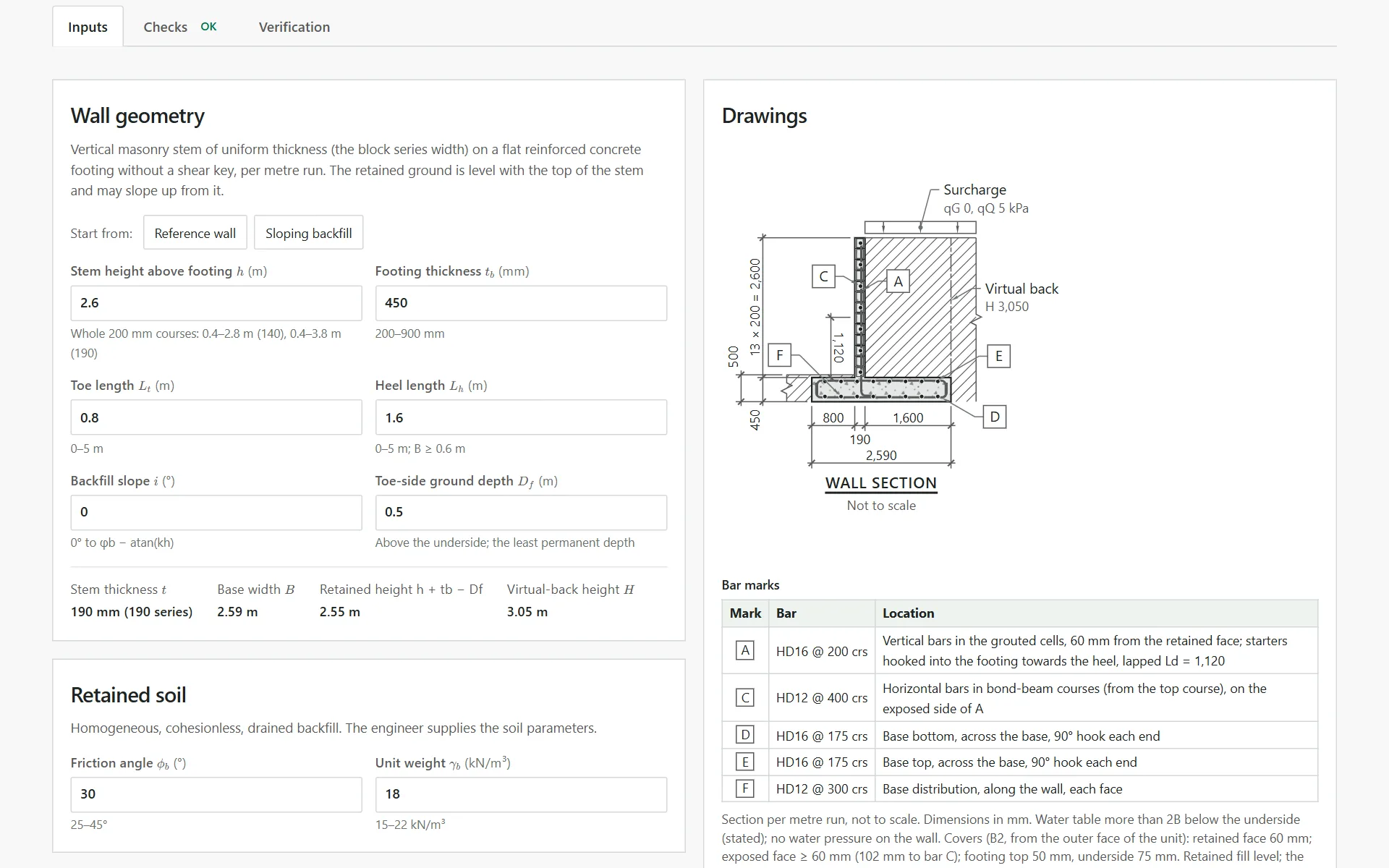
- The wall geometry in block courses and the ground in front of and behind it.
- The retained and foundation soil properties, the surcharge and the earthquake inputs.
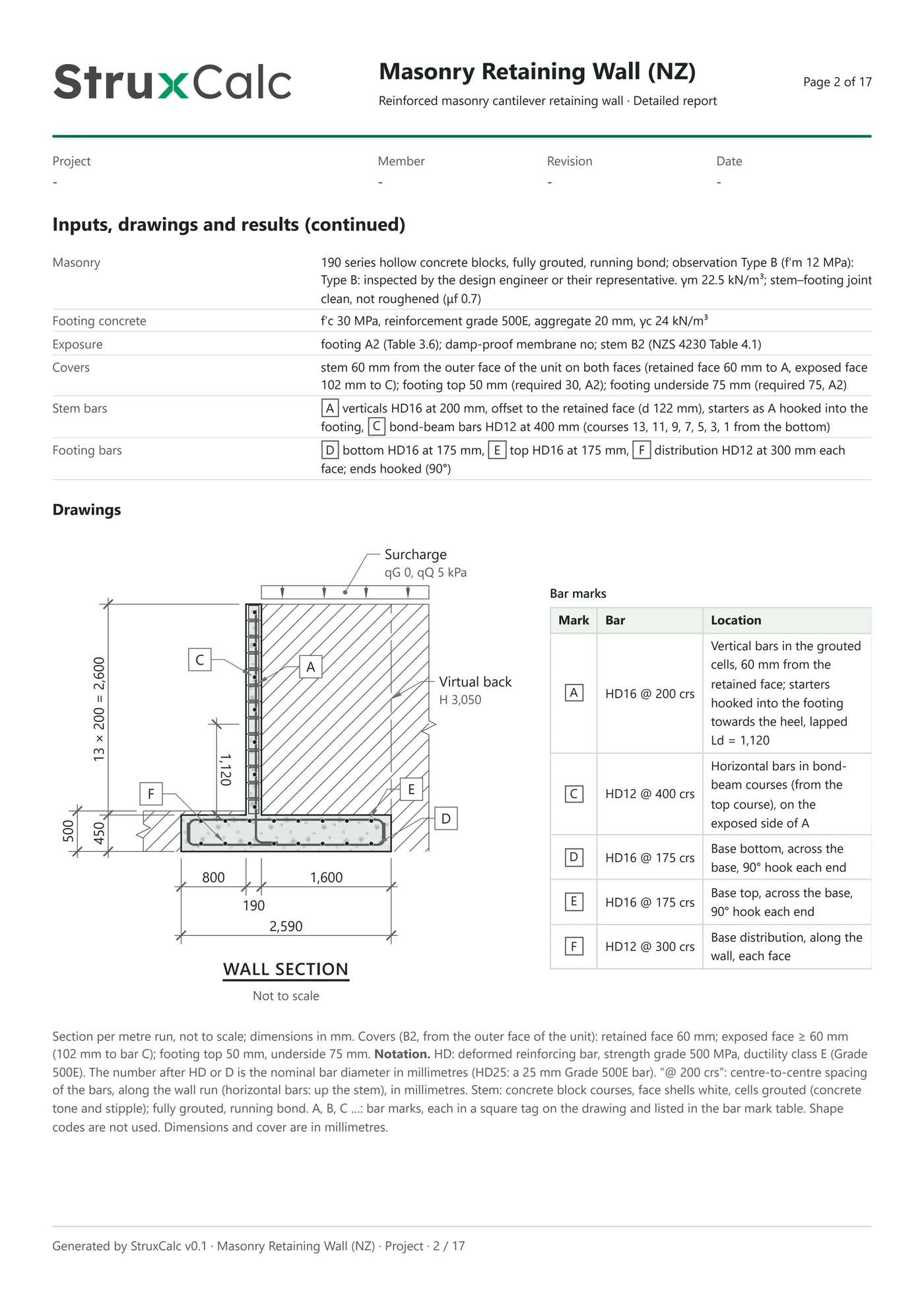
- The masonry, the footing concrete, covers and reinforcement.
What you get
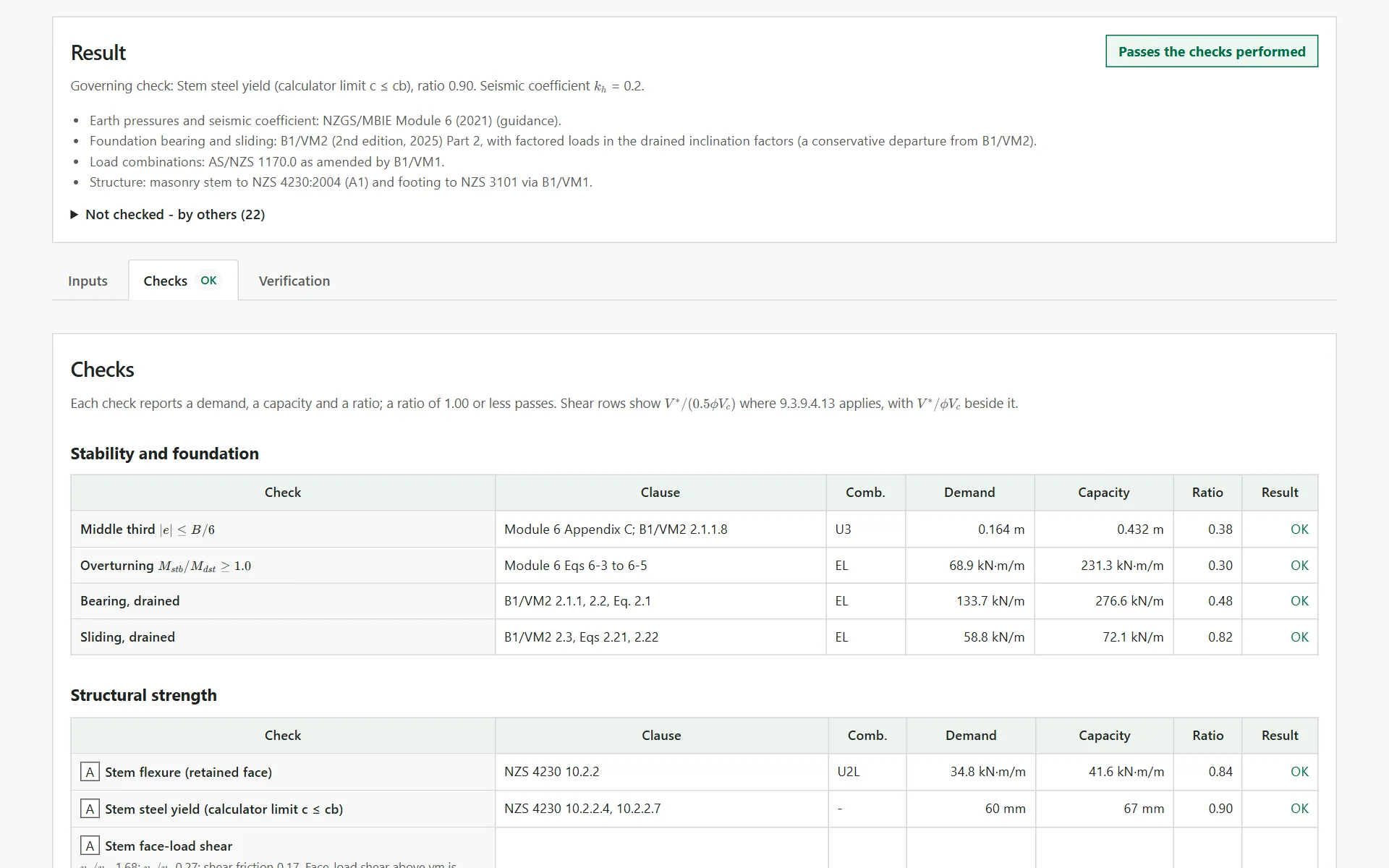
- A pass or fail result with the governing check and combination.
- Stability, foundation and structural checks with their clauses, and the detailing checks.
- A block wall section with bar marks and a diagram of the actions, an A4 report, and a project file or account project that keeps the inputs.
Scope
- A vertical masonry stem of one thickness on a flat footing without a shear key, with cohesionless, drained backfill.
- Not checked: global slope stability, settlement, drainage and water pressure.